Built to Last, Built to Feel: The Hidden Psychology Behind Enduring Architecture
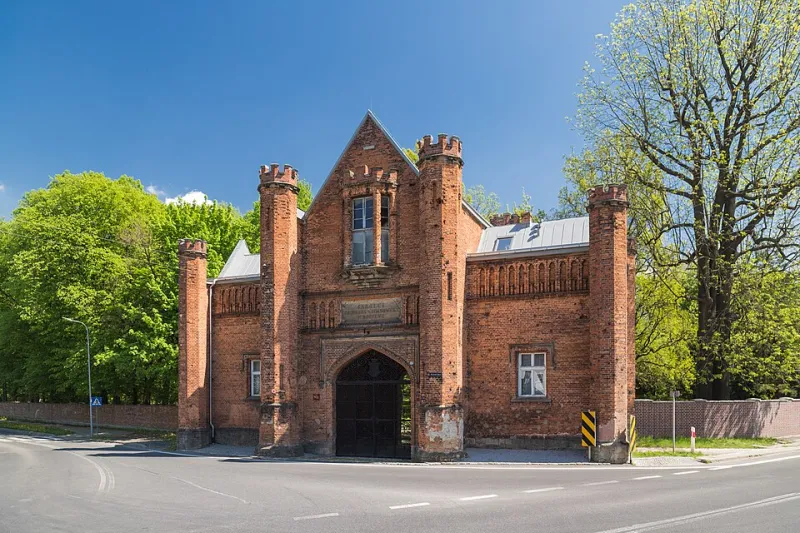
Photo: Marcin Konsek, CC BY-SA 4.0, via Wikimedia Commons
There is a particular sensation that washes over a person when they step into a building that has stood for generations. It is not nostalgia, precisely — nor is it simply admiration for craftsmanship. It is something closer to trust. The walls have held. The structure has weathered seasons, economic cycles, and the relentless pressure of time. And in that endurance, the building communicates something deeply reassuring to the human nervous system: this place is safe.
At RB Architect, we have long observed that the qualities that make a building physically durable — thoughtful material selection, structural integrity, and timeless compositional logic — are the very same qualities that foster emotional resonance in the people who inhabit them. This is not coincidence. It is, increasingly, something that environmental psychology and neuroscience are beginning to document with rigor.
What the Research Tells Us About Space and Mind
Environmental psychology — the study of how physical surroundings influence human behavior and mental states — has accumulated decades of evidence connecting architectural quality to measurable psychological outcomes. Researchers at institutions including the Academy of Neuroscience for Architecture (ANFA) have demonstrated that spatial characteristics such as ceiling height, natural light penetration, material texture, and acoustic quality directly affect cortisol levels, mood regulation, and even cognitive performance.
What is particularly striking, however, is the emerging evidence around permanence as a psychological variable. Studies examining how occupants relate to buildings over time suggest that structures perceived as durable — those built from materials that age gracefully and maintain their structural coherence — generate stronger feelings of safety and belonging than their more ephemeral counterparts. In short, when a building looks like it will outlast us, we feel more grounded within it.
This finding carries significant implications for architectural practice. It suggests that the decision to specify natural stone over synthetic cladding, or to invest in structural redundancy beyond minimum code requirements, is not merely a matter of engineering conservatism. It is, in a very real sense, an investment in the psychological welfare of future occupants.
Material Honesty and the Comfort of Authenticity
One of the most consistent themes in durable design is what architects often call material honesty — the practice of allowing building materials to express their true nature rather than disguising or imitating other substances. Exposed brick, structural timber, cast concrete, and natural stone do not merely look appealing; they communicate authenticity in a way that resonates on an almost instinctive level.
Humans are remarkably adept at detecting artificiality. Laminate surfaces that mimic wood grain, vinyl flooring printed to resemble stone, and synthetic stucco applied over foam insulation may satisfy short-term budget constraints, but they rarely generate the emotional warmth that genuine materials produce. More importantly, authentic materials age in ways that feel natural and even beautiful — the patina of aged copper, the silvering of weathered cedar, the deepening grain of well-worn hardwood floors. These transformations signal that a building is alive, responsive to time, and fundamentally honest.
At RB Architect, our residential and commercial projects consistently prioritize materials with proven longevity and authentic character. The initial cost differential is frequently recovered within a decade through reduced maintenance expenditures — but the psychological dividend begins accruing on the first day of occupancy.
Case Study: The Enduring Appeal of Civic Architecture
Consider the continued vitality of early twentieth-century civic buildings across American cities. Courthouses, libraries, and post offices constructed during the federal building programs of the 1910s through 1940s — many featuring load-bearing masonry, generous proportions, and classical compositional order — remain among the most beloved structures in their communities. This affection is not merely historical sentiment.
Residents and visitors consistently rate these buildings as more welcoming, more trustworthy, and more conducive to their intended civic functions than many of their mid-century and contemporary replacements. The reasons are multiple: the scale is human, the materials are tactile and warm, the proportions are harmonious, and — critically — the buildings communicate through their very solidity that they were designed to serve their communities indefinitely.
This dynamic is not limited to public buildings. Long-established residential neighborhoods built during the same era, featuring brick construction, deep front porches, and mature street trees, consistently command premium valuations and generate strong community attachment. The architecture of permanence, it turns out, is also the architecture of place-making.
Timeless Aesthetics: Restraint as a Design Strategy
One of the more counterintuitive lessons of architectural history is that buildings designed to be fashionable rarely age well — in either the structural or the psychological sense. Trends in exterior cladding, formal experimentation, and material novelty that appear fresh upon completion often feel dated within fifteen years and actively dispiriting within thirty.
Timeless design, by contrast, tends toward restraint. It favors proportional discipline over formal extravagance, material quality over surface novelty, and compositional coherence over stylistic provocation. This does not mean timeless design is conservative or uninspired — some of the most quietly innovative buildings of the past century achieve their power precisely through a disciplined economy of means.
At RB Architect, our design philosophy embraces this principle as a form of respect for our clients and their communities. We ask ourselves, with each project: will this building feel as appropriate and as welcoming in forty years as it does today? That question focuses the design process in productive ways, directing attention toward fundamentals — light, proportion, material, detail — that outlast any particular stylistic moment.
Structural Integrity as Psychological Foundation
Beyond aesthetics, the structural integrity of a building communicates powerfully to its occupants, often below the threshold of conscious awareness. Buildings that flex, creak, or exhibit visible signs of distress generate low-grade anxiety in the people who use them. Conversely, buildings with robust structural systems — those that feel genuinely solid underfoot and overhead — contribute to a baseline sense of physical security that supports productive, comfortable habitation.
This is especially relevant in commercial settings, where employee well-being and productivity are directly tied to the quality of the built environment. Research consistently shows that workers in well-constructed, well-maintained buildings report higher job satisfaction, lower stress levels, and greater organizational commitment than those in buildings perceived as poorly built or deteriorating.
Designing for Generations
The most enduring buildings in American architectural history share a common quality: they were designed with future generations in mind. Their creators understood that a building is not simply a product delivered to a client, but a contribution to the physical fabric of a community — one that will outlast the original occupants, the original program, and quite possibly the original neighborhood context.
At RB Architect, this long view shapes every decision we make. From the specification of structural systems capable of accommodating future adaptive reuse, to the selection of exterior materials that will age gracefully over decades, to the proportioning of interior spaces that can serve multiple functions over a building's lifetime — we design with permanence as both a practical and a philosophical commitment.
The buildings that feel best to live and work in are, almost invariably, the buildings that were designed to last. That connection is not accidental. It reflects a fundamental truth about the relationship between human beings and the built environment: we thrive in spaces that take us seriously enough to endure.