Silence Is a Design Decision: The Rise of Intentional Acoustics in Commercial Spaces
Walk into a poorly designed open-plan office and the problem announces itself immediately. Conversations bleed across workstations. HVAC systems contribute a low, persistent drone. The cumulative effect—what researchers now classify as noise fatigue—diminishes cognitive performance, elevates stress hormones, and drives employee dissatisfaction in ways that show up clearly in retention data. For decades, the architectural response was largely cosmetic: add acoustic panels, install drop ceilings, hope for the best.
That era is ending. Across commercial sectors—from corporate headquarters and healthcare facilities to hospitality venues and performing arts centers—sound design is asserting itself as a primary architectural consideration, not a late-stage corrective measure. The firms that recognize this shift earliest are delivering spaces that perform better, age more gracefully, and command stronger market positioning for their clients.
Why Sound Was Overlooked for So Long
Architecture has always privileged the visual. Renderings communicate form, material, and light with immediacy; they cannot convey the acoustic character of a space. Client presentations rarely include a simulation of what a room will sound like at full occupancy. Construction budgets, when squeezed, tend to cut acoustic treatments before structural or aesthetic line items.
The consequences of this hierarchy have been well documented. A 2019 study by the Acoustical Society of America found that noise remains the single most cited workplace complaint among US office workers, outpacing temperature, lighting, and ergonomics. In healthcare environments, excessive ambient sound has been linked to medication errors and extended patient recovery times. In K-12 schools, poor classroom acoustics disproportionately affect students with hearing impairments and non-native English speakers—a finding with significant equity implications.
The good news is that awareness is accelerating, and the tools available to architects have never been more sophisticated.
Parametric Design and the New Acoustic Vocabulary
One of the most consequential developments in architectural acoustics is the integration of computational modeling into the early design process. Parametric design platforms now allow architects to simulate sound behavior across a range of occupancy scenarios, material combinations, and room geometries before a single physical decision is finalized. This represents a fundamental shift: acoustics moves from the consultant's addendum to the architect's core toolkit.
The results are visible in some of the most celebrated recent projects in American architecture. Concert halls designed with parametric acoustic modeling—where wall geometries, surface materials, and ceiling profiles are all optimized simultaneously—are achieving levels of sonic clarity and warmth that earlier generations of designers could only approximate through expensive physical prototyping. The approach is no longer exclusive to high-budget cultural institutions. Mid-market office developers, hotel brands, and healthcare systems are adopting similar methodologies, recognizing that acoustic performance is a quantifiable competitive differentiator.
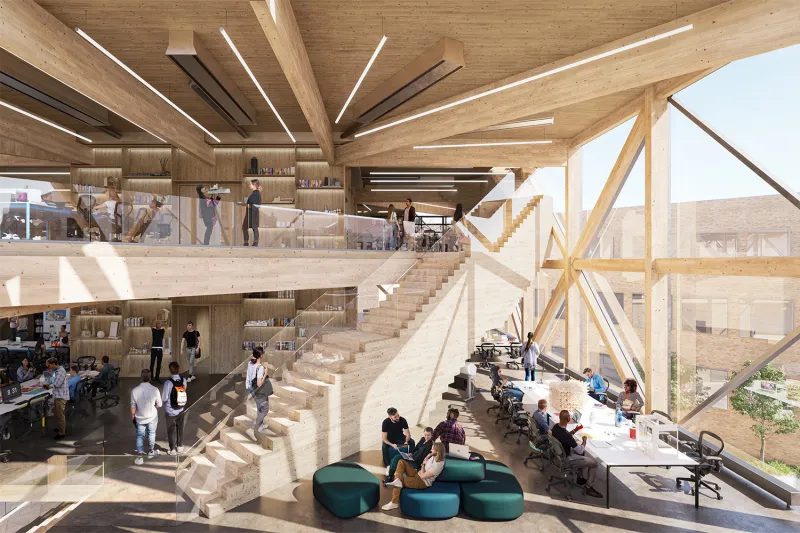
Mass timber construction, which has gained significant traction across the US over the past decade, introduces an interesting acoustic variable. Exposed wood surfaces behave differently than concrete or drywall, and early mass timber projects revealed some unexpected challenges with low-frequency sound transmission between floors. The industry response has been instructive: rather than abandoning the material, structural and acoustic engineers have collaborated on assembly details that preserve timber's visual and environmental advantages while addressing its acoustic limitations. This kind of integrated problem-solving exemplifies the direction the profession is moving.
The Open Office Reckoning
No commercial typology has suffered more from acoustic neglect than the open-plan office. The format, which became the default workspace configuration for American corporations over the past two decades, was sold largely on the premise of collaboration and cost efficiency. The acoustic consequences were underestimated almost universally.
The correction is now underway, and it is more nuanced than simply reverting to private offices. Progressive workplace designers are developing what practitioners call the acoustic zoning model—a deliberate spatial hierarchy in which areas designated for focused individual work are acoustically separated from zones intended for collaboration, and both are distinguished from informal social spaces. This is not a new concept in theory, but its rigorous application, supported by real-time occupancy data and post-occupancy acoustic measurement, represents a meaningful advance in practice.
Material choices play a central role. Fabric-wrapped panels, mass-loaded vinyl barriers, suspended baffles with high noise reduction coefficients, and purpose-designed flooring assemblies are being deployed not as afterthoughts but as integral architectural elements. When specified correctly and early, these components can be integrated seamlessly into a design language rather than appearing as visible acoustic remediation.
Sound as Hospitality
The hospitality sector has been particularly responsive to acoustic innovation, for reasons that are both intuitive and commercially concrete. Restaurant noise levels in major US cities have become a significant driver of consumer reviews and repeat business. A 2022 analysis of Yelp data found that noise complaints were among the top five negative factors in one-star reviews for dining establishments across every major American market.
Forward-thinking restaurant and hotel designers are now engaging acoustic consultants at concept stage, treating the sonic environment as part of the brand identity. Reverberation targets, background music levels, and kitchen sound management are specified with the same rigor applied to lighting design. The results can be genuinely transformative: a well-tuned dining room encourages longer stays, higher per-cover spending, and the kind of word-of-mouth endorsement that no marketing budget can reliably purchase.
What Clients Should Be Asking
For commercial clients initiating design projects in 2025, acoustic quality is worth explicit attention in the briefing process. Asking prospective architects how they integrate acoustic performance into early design decisions—not just what acoustic consultants they engage downstream—is a meaningful differentiator. Requesting post-occupancy acoustic measurement as part of project closeout creates accountability and generates data that improves future work.
Buildings that manage sound well tend to age better, functionally and commercially. Tenants stay longer in offices where concentration is possible. Hotel guests return to properties where rooms are genuinely quiet. Concert audiences form lasting loyalties to venues that make music sound extraordinary. These outcomes are not accidental. They are the product of deliberate design decisions made early, maintained consistently, and executed with the same discipline that architecture has long applied to structure, light, and form.
Sound, in the end, is not separate from architecture. It is architecture—experienced in real time by every person who occupies a space. The firms that treat it accordingly are building something that endures.