Architecture's Long Game: The Principles That Separate Lasting Buildings from Dated Ones
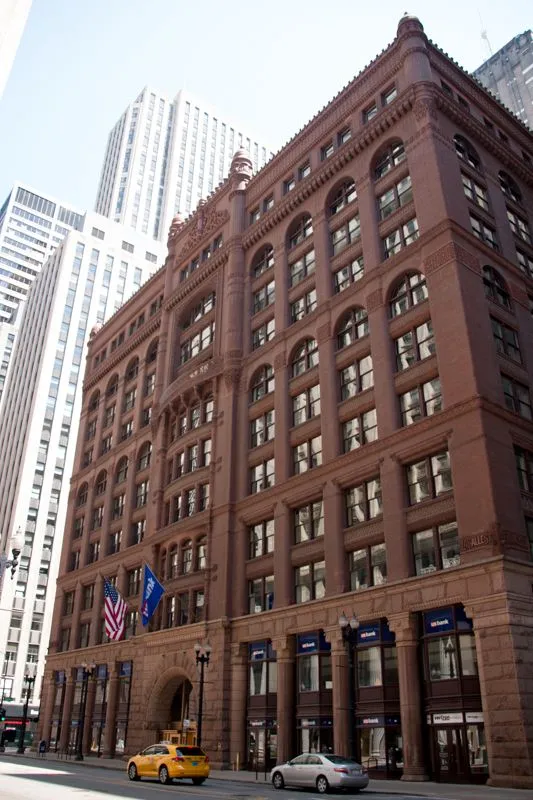
Photo: timeless classic brick stone commercial building exterior architectural detail urban American city, via i.pinimg.com
Consider two buildings constructed in the same American city, in the same decade, with comparable construction budgets. One has become a neighborhood landmark — photographed, studied, and fiercely protected by the community that inhabits it. The other has been quietly demolished, or perhaps worse, endures as an embarrassment to its original ambitions, its dated cladding and awkward proportions serving as a cautionary tale about the hazards of chasing contemporary fashion.
What separates them?
This is not a rhetorical question. It is, in our view at RB Architect, the most important question in the discipline — and one that the profession does not ask itself nearly often enough. In an industry that celebrates novelty and rewards visual disruption, the sustained pursuit of architectural longevity can feel almost unfashionable. But it is precisely this pursuit that defines our practice, and it is worth examining honestly what it demands.
The Tyranny of the Moment
Every era of American architecture has produced buildings that were, at the time of their completion, considered exemplary expressions of contemporary thinking. Many of them have not aged gracefully. The mirrored glass towers of the 1980s, the deconstructivist gestures of the 1990s, the aggressively parametric forms of the early 2000s — each generation of stylistic enthusiasm has left behind structures that now read as period pieces rather than timeless contributions to the built environment.
This is not simply a matter of changing taste. It reflects something more structural about the design decision-making process. When a building's primary ambition is to feel current — to register as sophisticated within the visual vocabulary of its particular moment — it is, by definition, mortgaging its future against the present. The moment passes. The building remains.
Lasting architecture, by contrast, tends to be conceived against a longer temporal horizon. Its designers are asking not only how the building will appear at the ribbon cutting, but how it will perform — functionally, aesthetically, and emotionally — when it is twenty, fifty, or one hundred years old.
Proportion Before Ornamentation
If there is a single design principle that most reliably predicts architectural longevity, it is the primacy of proportion. Buildings that endure almost invariably possess a rigorous internal logic of scale — a coherent relationship between the dimensions of their elements that satisfies the eye without demanding explanation.
This is distinct from stylistic correctness. A well-proportioned industrial warehouse and a well-proportioned neoclassical courthouse share nothing in their formal vocabularies, yet both can achieve the quiet authority that comes from getting the fundamental geometry right. Conversely, no quantity of expensive cladding or elaborate detailing can rescue a building whose underlying proportions are compromised.
The practical implication for design practice is that proportion must be resolved early — at the massing stage, before materiality or ornament enters the conversation. At RB Architect, we treat early massing studies as the most consequential phase of any project. The decisions made in those initial weeks, when a building is still a simple volumetric model, will determine whether the finished structure has the capacity to endure.
The Honesty of Materials
Enduring buildings tend to be made of materials that age honestly. Stone acquires patina. Brick weathers with dignity. Timber develops character. These materials do not pretend to be something they are not, and they do not require the building to maintain an illusion over time.
Contrast this with the fate of many synthetic and composite cladding systems introduced over the past four decades. Materials selected for their ability to mimic the appearance of more expensive alternatives at lower cost frequently betray their origins as they age — fading unevenly, delaminating at joints, or simply failing to develop the visual depth that genuine materials accumulate through weathering. What read as convincingly contemporary at installation can appear unconvincing within a single decade.
This is not an argument for material conservatism or an insistence that contemporary buildings must employ only traditional materials. Mass timber, weathering steel, and high-performance concrete are all thoroughly modern in their application and entirely capable of aging with distinction. The common thread is authenticity — materials that perform what they appear to be, and that improve, or at least stabilize, under the influence of time.
Adaptability as a Longevity Strategy
A building's ability to endure is not solely a function of its aesthetic qualities. Structures that survive across generations almost always share a capacity for adaptation — the ability to absorb new uses, new technologies, and new occupant expectations without requiring fundamental reconstruction.
This principle has direct implications for how commercial and residential buildings are designed at the structural level. Generous floor-to-ceiling heights, column grids that do not dictate a single interior configuration, and mechanical systems designed for accessibility and replacement are not merely practical virtues. They are longevity investments. The building that can be reimagined without being demolished is the building that communities choose to keep.
Some of the most compelling examples of architectural longevity in American cities are buildings that have served four or five distinct functions across their lifetimes — warehouses converted to lofts, factories reimagined as creative offices, department stores transformed into mixed-use civic anchors. Their survival is not accidental. It reflects original design decisions that, whether intentionally or not, left sufficient structural and spatial generosity for future generations to work within.
Restraint as a Form of Confidence
There is a particular kind of architectural confidence that expresses itself through restraint rather than elaboration. It is the confidence of a designer who trusts the fundamental quality of the work to carry its own authority — who does not feel compelled to add visual incident in every corner, or to signal sophistication through complexity.
This restraint is one of the more reliable markers of buildings that age well. When a design relies on a limited palette of elements executed with exceptional care — a precisely detailed cornice, a carefully considered entry sequence, a window proportion that rewards sustained attention — those elements continue to reward observation across decades. When a design disperses its energy across a proliferation of competing gestures, those gestures tend to cancel one another over time, leaving an impression of restlessness rather than resolution.
A Framework for Evaluation
For clients evaluating the long-term potential of a design, we offer a practical set of questions. Does the building's massing hold its own without the assistance of its surface treatment? Are the materials genuine in their character, and will they age with dignity rather than requiring constant intervention to maintain their original appearance? Does the structural and spatial organization allow for future adaptation? And finally — does the design possess a coherent internal logic that can be understood and appreciated independently of the stylistic moment in which it was conceived?
These are demanding criteria. Meeting them requires a willingness to subordinate novelty to discipline, and to measure success against a timeline that extends well beyond the project's completion date.
At RB Architect, this is the standard we hold ourselves to — not because permanence is inherently superior to innovation, but because we believe that the greatest service an architect can render is a building that continues to serve, inspire, and belong to its place long after the conversation that produced it has been forgotten.